For Dalit History Month, three KL Hatke stories are unlocked for a limited time, read them now.
Who Names, Who Belongs: Caste, Memory, and the Making of Fokatpura
The Iconography of Dalit Resistance: Contestations over Ambedkar Statues in U.P.
In our continued exploration of Dalit bastis and their histories, we spent time in Harijanpur and Chamrauha in Uttar Pradesh this week.
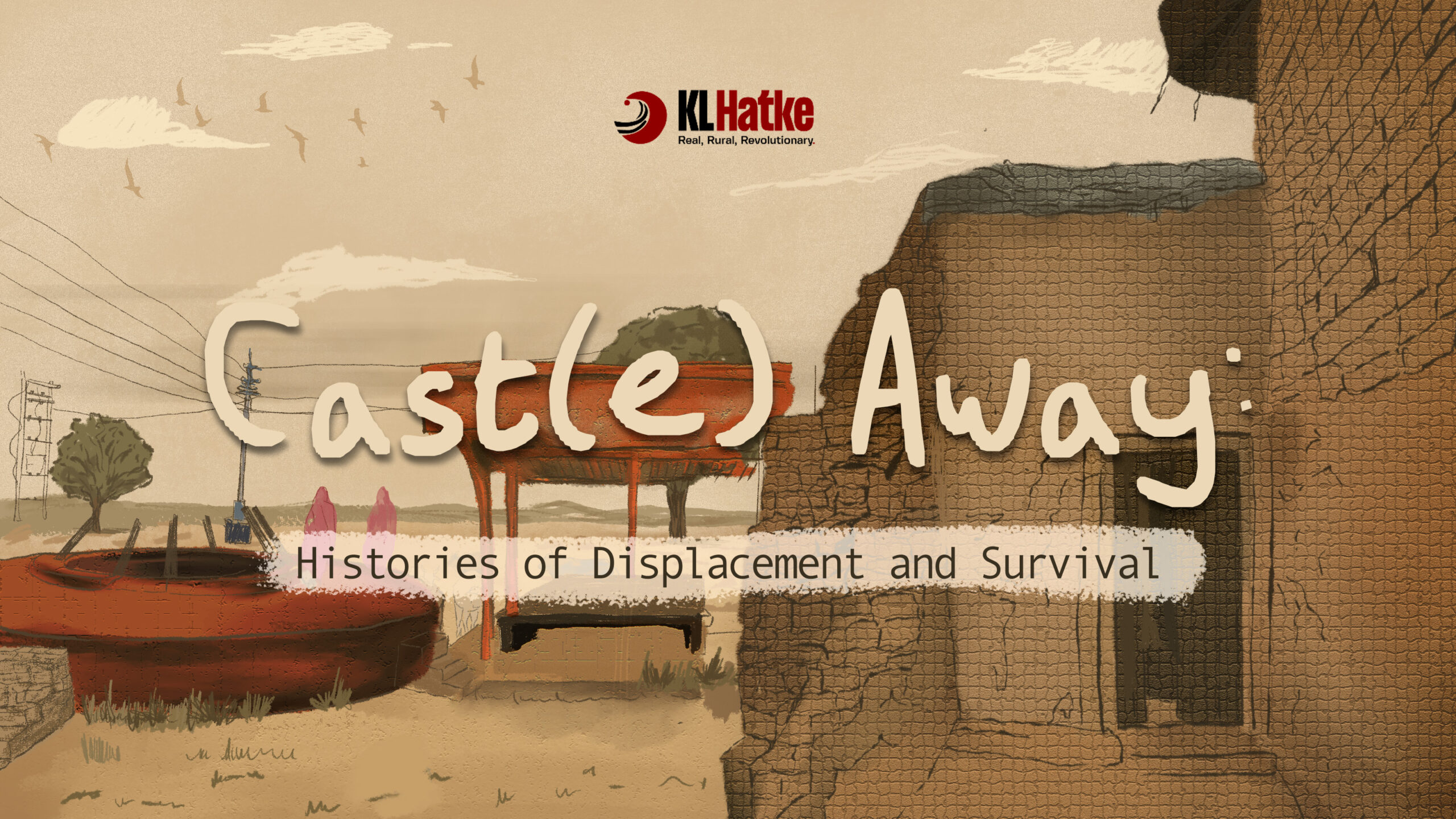
In the dense forests near Manikpur district, a group of families fleeing caste violence began to build a life from scratch in the early 1960s. They were Dalits, pushed out of their homes in Banda district for refusing to do caste-assigned labour like disposing of cow dung or cleaning toilets.
Among them was Ramlali, then just a child. She remembers her father carrying their steel plates, water pots, and bedding on his head through the jungle, looking for land where they would not be humiliated daily. “They beat us if we refuse to do sanitation work,” she recalls. “The men came first, cleared the trees, tied branches to make huts, then called for us.”
There was no water, no name for the place. For a short while, an upper-caste Thakur man allowed them to use his well. But after a month, he denied them further access. Left with no choice, the families, now over a hundred, began boiling lake water. The women climbed a steep slope with buckets balanced on their heads, walked to a small water body, and returned in silence.
“There were no roads, no lights, nothing,” says Binda, another long-time resident. “Just jungle.”
They wanted to give the village a name of their own choosing. But in the 1980s, when a Congress leader visited the area during her election campaign, she renamed it Harijanpur — literally, “village of Harijans,” a term coined by Gandhi but long rejected by the Dalit movement for its patronising and caste-defined connotations.
“When the Congress leader came, we were told she would get us work and water,” Ramlali says. She wore a khadi saree and asked, “Kahan kuan khodwa de?” (Where should we get the well dug?). The well, however, was dug by the people themselves. Ramlali’s mother earned 1.5 aanas (2 cents) a day for her labour, while her father earned slightly more – 2.5 aanas (3.3 cents) a day. That well still supplies water to the village. But with it came a name that no one asked for.
For decades, residents have petitioned to change the name to Ambedkarnagar. At one point, a board with the new name was even installed. But overnight, it was stolen. When they approach officials and mention Ambedkarnagar, they are met with confusion or outright dismissal. Eventually, they are forced to say Harijanpur.
The name sticks in official records and in reputation. “No one wants to marry into a village called Harijanpur,” says Binda. “It signals to everyone what caste you are. And what caste you are tells them how poor you are, how desperate.”
In 1986, the village was home to over 150 families. By 1987, that number had dropped to just 60, as many left in search of dignity and opportunities. But now, many of those pushed out of cities by rising rents and social rejection are returning. Today, around 100 families live in Harijanpur.
With growth has come pushback. “As soon as they saw progress, people from the Vishnoi caste came to claim the land,” Ramlali says. “They threatened us, tried to drive us out, saying they wanted to live here instead. But we refused. We had built this place.”
Just a few kilometers away, in Chamrauha, Aasha Devi sees a similar pattern. Originally from Madhya Pradesh, she moved here after marriage 15 years ago. This village, too, is known by a name associated with marginality. She recalls a moment on a bus journey that has stayed with her. She was returning to her husband’s home when her purse was stolen. Someone asked where she was headed. Trying to avoid saying the name, Aasha replied simply, “To my husband’s place.” But they pressed her for the village’s name, and she eventually said, “Chamrauha.” The crowd laughed. “Even a thief got robbed there?” someone jeered. “What kind of place is Chamrauha?”
Residents here speak of a Dalit cultivator who once owned 300 bighas of land. During a religious ceremony, he gifted a few bighas to a Brahmin priest. Slowly, the priest took over most of the landholding. Today, that Dalit family owns just 8 bighas, split among many heirs.
Names, in these parts, are never incidental. They carry history, signal hierarchy, and determine access. They influence how officials respond to requests, how neighbors regard marriages, and how landlords decide whom to rent to.
“Naam badalne se kya hota hai?” Binda says. “Society toh pehchan leti hai. Aur pehchan milti hai toh usi ke saath bhedbhav bhi.” (What does changing a name do? Society still recognises you. And with that recognition comes discrimination.)
“Whenever I tell someone I’m going to Chamrauha, they start laughing. Of course it hurts.” Savita, who has been living in this village for 60 years, speaking to Nazni.
Nazni, Khabar Lahariya’s senior reporter, sees how that perception shapes daily life: “Casteism still runs so deep in people that the moment they hear you’re going to Chamrauha, they ask, ‘Do you have relatives there?’ And then they look at you differently, like it’s a place to be ashamed of. But the truth is, Chamrauha is a beautiful village—tucked away in the forests, by the riverside. Still, when you enter, the lack of basic facilities tells you everything about the harsh lives of the Dalit and Adivasi communities living there.”
She describes a village that remains physically and metaphorically cut off from the rest of the district. “For three to four months during the monsoon, the road to the village is completely cut off,” she says. “It’s deep inside the forest, so there’s always the risk of wildfires. The lanes are narrow, barely navigable, and because the village sits on a low-lying riverside patch, there’s a constant threat of flooding during rains.”
Credits:
Report: Nazni
Written by: Sejal
Edit: Srishti
Design: Jyotsana